Live products

A software development portfolio you can actually use

Screenshots are easy to dress up, so this page does something different: everything below is live, designed and built by Viva Studio, and you can open it right now. Read what each one does for its users, then what building it proves about how we work. If your project needs something similar, that is the conversation to have with us.

Will our software talk to the accounting system we already use?

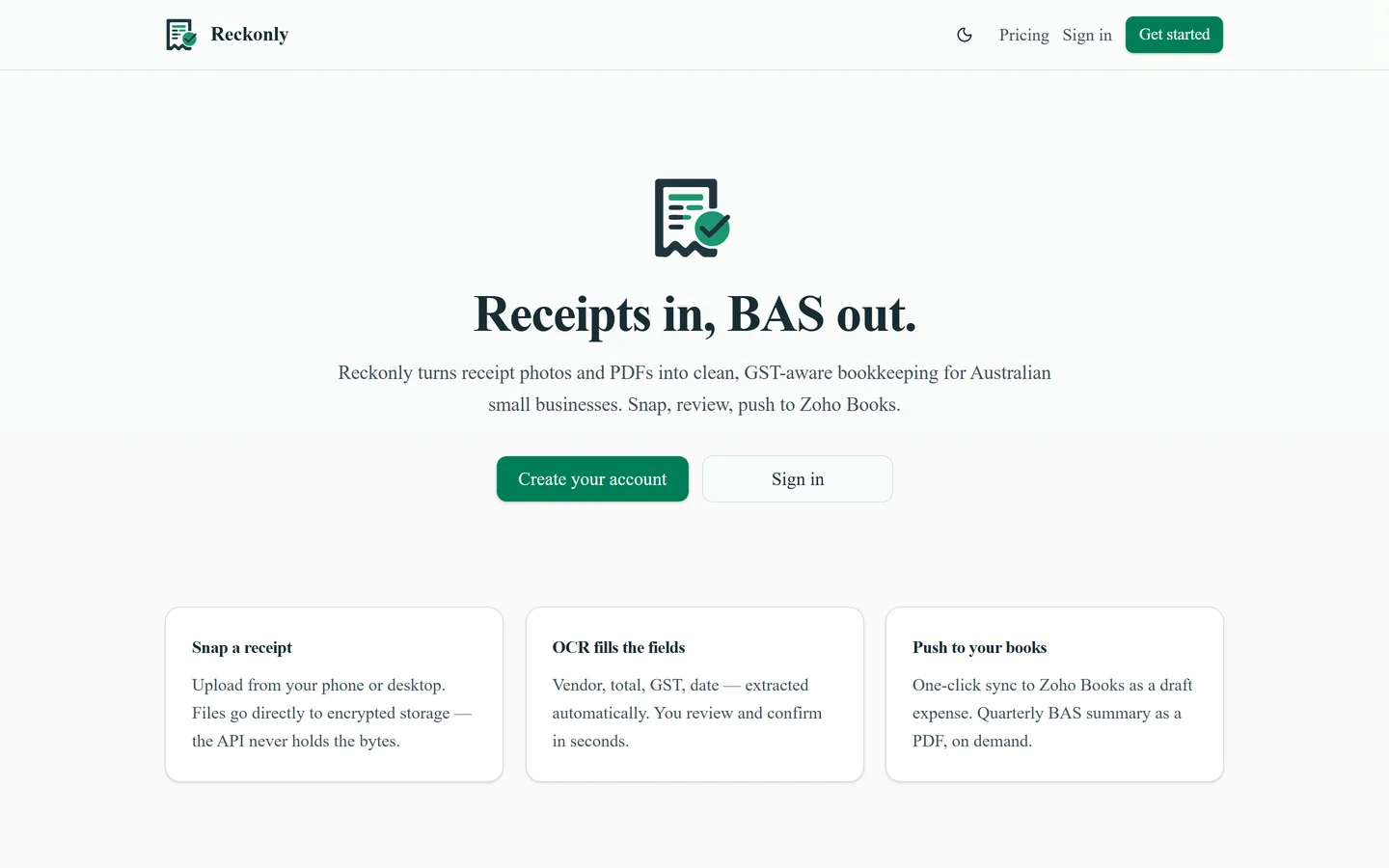
Reckonly is our answer for Australian small businesses. Photograph a receipt or forward it from your inbox; the app pulls the supplier, date, totals and GST out of the image and lays them out for the owner to check. Once approved, the expense lands in Zoho Books as a draft, ready for the accountant. And when BAS is due, it turns the quarter's expenses into a summary PDF.

  • Uses OCR to lift the numbers off a paper receipt, so nobody has to type them in.
  • Keeps a human review step before anything is posted, which is how you get books you can trust rather than a pile of guesses.
  • Posts confirmed expenses to Zoho Books through its API, so the accountant keeps working in the tool they already know.
  • Handles GST from day one, including the quarterly BAS summary, because Australian bookkeeping has rules that generic software ignores.
  • Shows we can connect a new product to a third-party system without breaking the workflow around it.

Can you build a marketplace where strangers deal with each other and both sides feel safe?

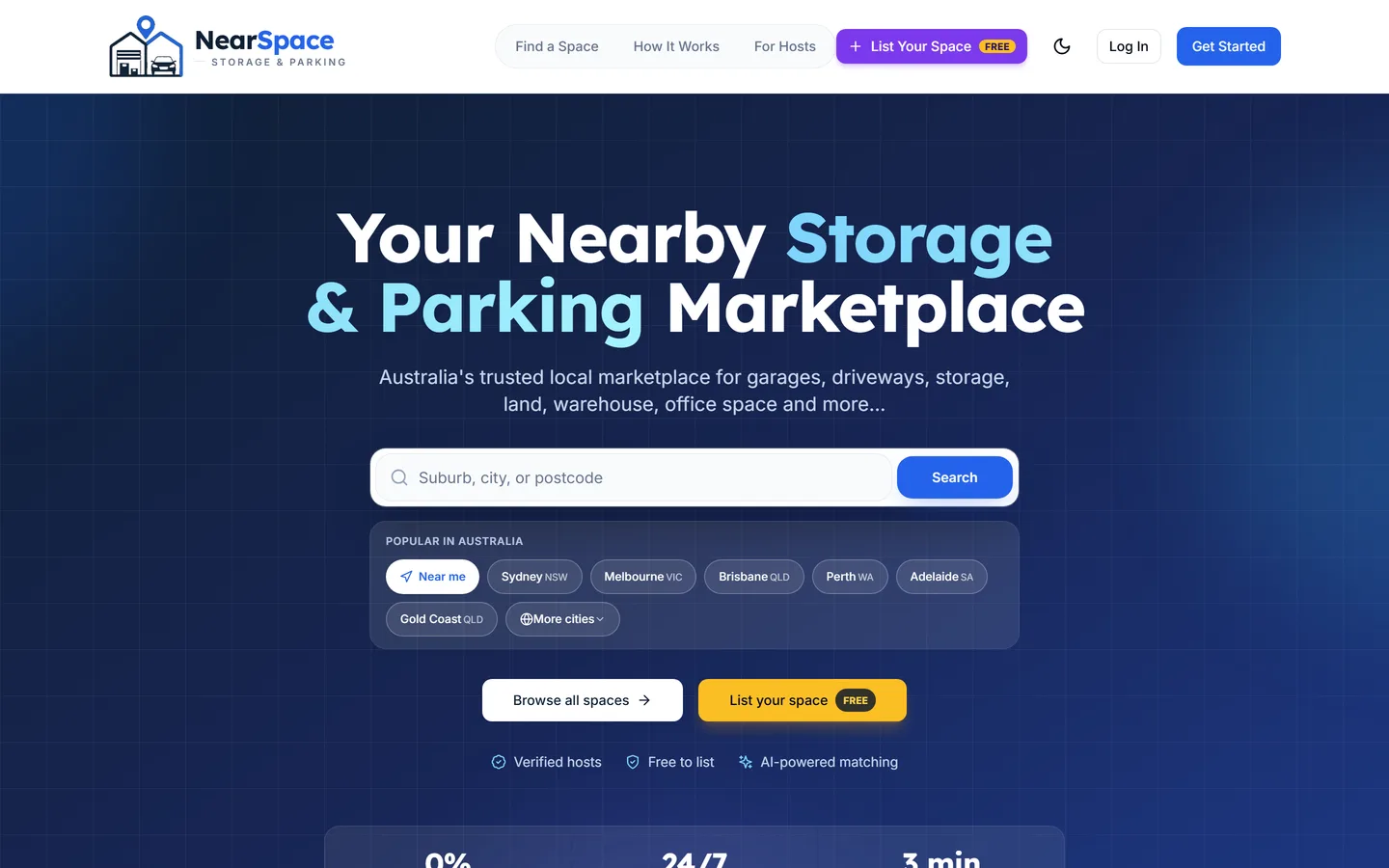
Near Space exists because plenty of Australian homes have a garage, driveway or spare room that nobody uses, while somebody a few streets away is paying for storage or parking. It connects the two. Hosts prove who they are before they can list, listing costs them nothing, renters find a space nearby and book it on the spot, and a smart-lock code lets them in without a key handover.

  • Runs real user accounts for two different kinds of customer, hosts and renters, each with a different job to do.
  • Checks a host's identity before their listing goes live, so renters are not dealing with an anonymous account.
  • Confirms a booking the moment it is made, so a renter never waits on a reply and a host earns from the space without chasing anyone.
  • Uses AI to rank the spaces most likely to suit each renter, which is a harder problem than a plain search.
  • Hands access over through smart-lock codes, a live integration with physical hardware, not just another web form.

Can you build something developers will trust with their production data?

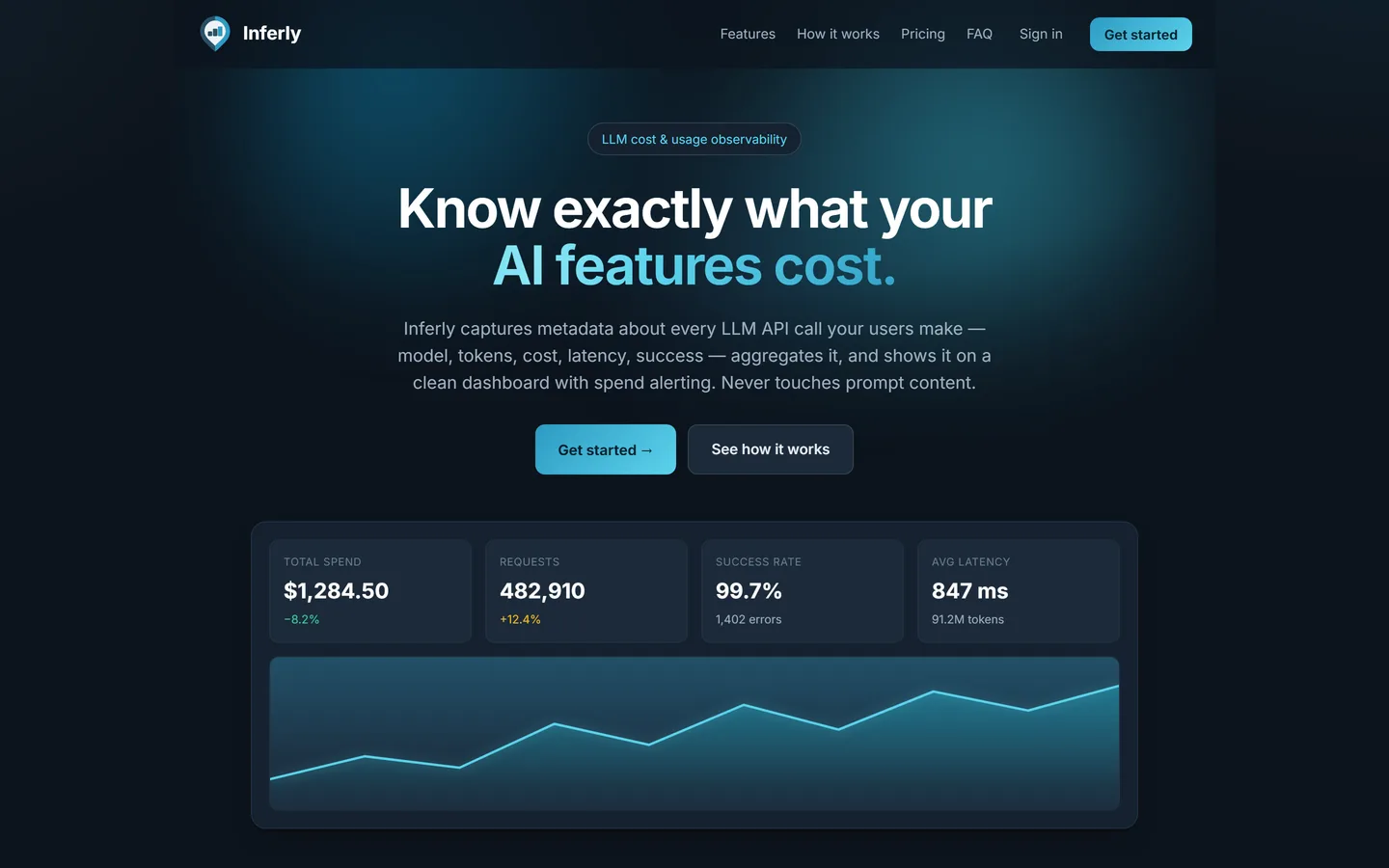
Inferly is built for engineering teams who have added AI features and want to know what each one costs while it is happening rather than a month later. Each time their code calls a model, it posts a short record to Inferly: which model, how many tokens, how long it took, whether it succeeded. Inferly attaches a price to that call and updates the spend, usage and error charts straight away. Nothing has to be installed, and the prompts themselves stay on the customer's side.

  • Takes telemetry through one HTTP endpoint, so a developer can start sending data in the time it takes to write a single request, without adding a library to their codebase.
  • Stores a dated history of provider pricing, so when a model's rate changes, last month's figures still add up.
  • Never receives the prompts themselves, only the numbers about them, which is the privacy question technical buyers ask first.
  • Pushes spend and error alerts to Slack or any webhook, so the team hears about a spike from Inferly rather than from the finance department.
  • Shows we can design an API and a real-time dashboard for an audience that reads the documentation closely.

Does the AI in your products do real work, or is it a gimmick?

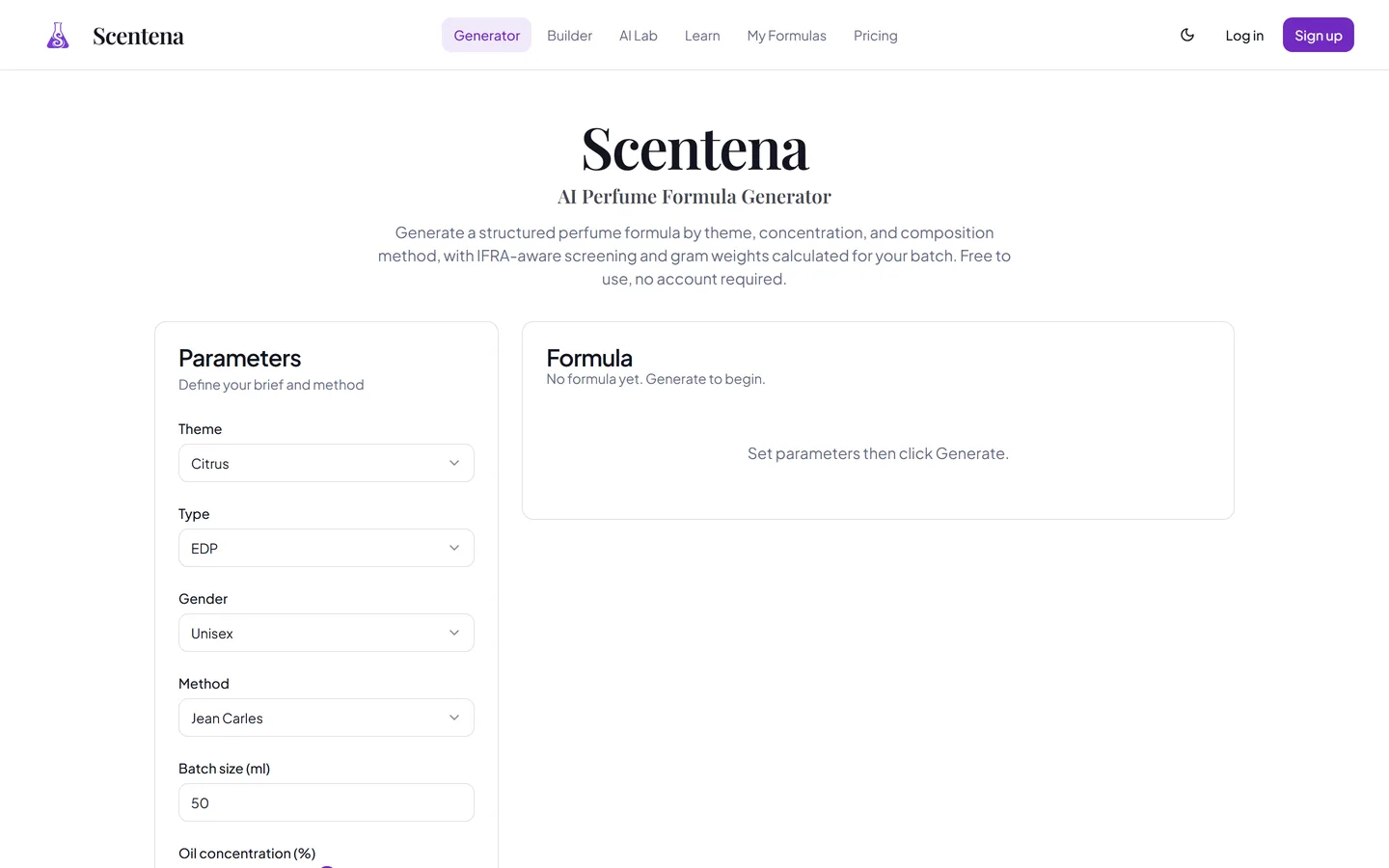
Scentena is a tool for people who make perfume. Describe the fragrance you are after, choose how strong it should be and how you plan to make it, and it drafts a full formula, checks each material against the industry's IFRA safety limits, and works out how many grams of each to weigh for the batch you have in mind. If you would rather build by hand, a manual accord builder does the arithmetic while you make the choices.

  • Puts real-world limits on what the AI can suggest, so a formula respects safety caps instead of merely sounding plausible.
  • Takes care of the sums perfumers find tedious: getting the percentages to add up and turning them into weights for a given batch.
  • Asks for no sign-up and no payment, which meant the whole flow had to be fast and self-explanatory.
  • Pairs the AI path with a manual one, because the best tools let people override the machine.
  • Demonstrates we can take a niche craft, learn its constraints and turn them into software its practitioners find useful.

What does this portfolio tell you about working with us?

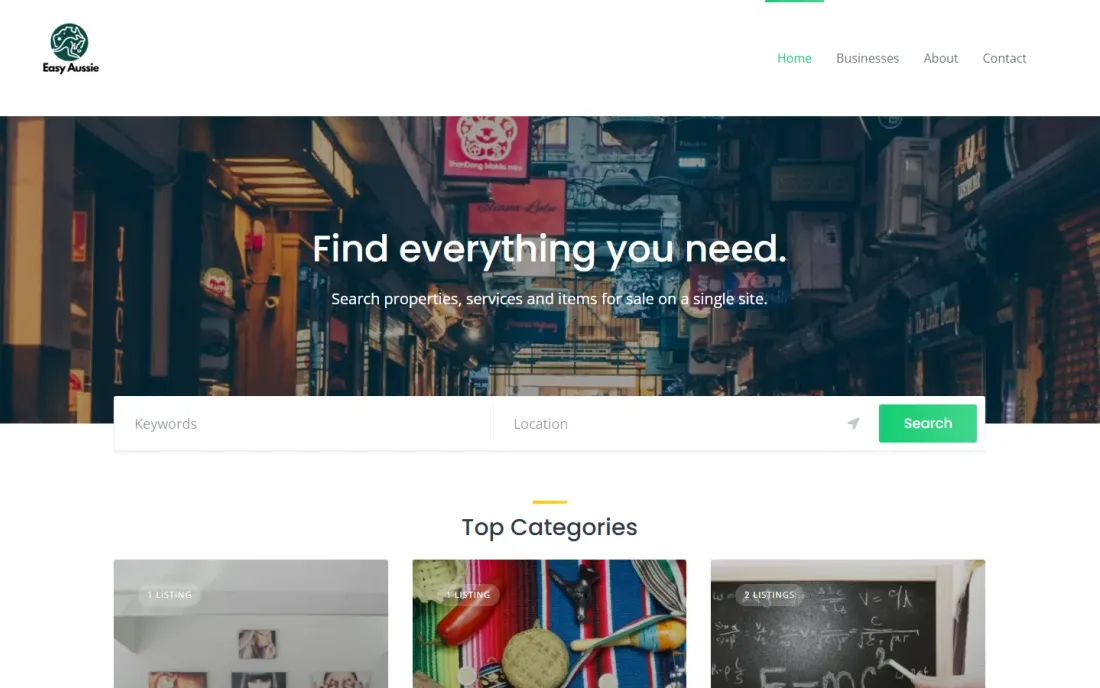
The four above go deepest, but the grid below has more. EzAussie is a community marketplace that puts local businesses, properties and items for sale on one searchable site, and the Mola Foundation site explains the programs a not-for-profit runs in Papua New Guinea and turns readers into donors. Between them they cover most of what small businesses ask for: user accounts, online bookings, a two-sided marketplace, AI that follows rules, donations, and integrations with accounting software, messaging tools and physical hardware. They are built with the same tools we use for client work, mainly Next.js, TypeScript and Postgres on Supabase, with .NET where a heavier backend earns its keep. Every one of them is still running, which is the part of a portfolio that matters most.

  • Accounts and permissions: Reckonly and Near Space both sign customers in to information that has to stay private.
  • Bookings: Near Space confirms a rental instantly and the host earns from it.
  • AI with guardrails: Near Space matches spaces to renters, and Scentena generates formulas within safety limits.
  • Integrations: Zoho Books for Reckonly, Slack and webhooks for Inferly, smart locks for Near Space.
  • Developer-facing design: Inferly's single-endpoint API is used by engineers who notice sloppy work.
  • Projects like these fall into our Web App / MVP tier from A$2,500 or a Custom Engagement from A$4,500. We quote each project individually after a free 30-minute consultation.

Portfolio

Work that speaks for itself

Real projects, real outcomes — products we've designed, built, and shipped.

Inferly — screenshot of the live product

AI cost observability

Inferly

Per-call telemetry for teams shipping AI features — model, tokens, latency and status posted to one JSON endpoint and priced with time-versioned rates. No SDK, and prompts never leave your app.

Web AppAIDevTools
Open the live site — Inferly (opens in a new tab)

Common questions

Are these real products or mock-ups?

All of them are live at public web addresses. Scentena and the Mola Foundation site need no sign-up, so you can open them in a minute. Reckonly, Near Space, Inferly and EzAussie show you their public pages first and let you create an account if you want to go further. Either way, judge them the way a customer would.

Were they built for clients or are they your own?

Both. Reckonly, Near Space, Inferly and Scentena are Viva Studio's own products, built and run by the studio, which is why we can show them in full rather than a blurred screenshot and explain every trade-off honestly. The Mola Foundation site was designed and built for a not-for-profit client. Either way, the work is ours and you can open it.

Could you build something like one of these for my business?

Yes, and that is usually why people land here. A product with one core workflow, like Scentena's formula generator, sits in our Web App / MVP tier from A$2,500, while a marketplace with identity checks and instant bookings like Near Space is closer to a Custom Engagement from A$4,500 (a straightforward website starts at A$900). We quote every project individually after a free 30-minute consultation, so you will know the exact figure before committing to anything.

What are they built with, and does it matter for my project?

Our usual tools are Next.js and TypeScript for the parts you see, Postgres on Supabase for data, and .NET when a project needs a heavier backend. We choose per project and tell you why in plain English. What matters more to you is that the same people who built these will be building yours.

What should I look at when I open them?

Open one on your phone and see how quickly it loads and whether the buttons are easy to hit. Try the sign-up or the first action and notice whether the app explains what it needs from you. Those small things are what your own customers will judge, and they are what we spend our time on.