Custom software
Custom software for the process that makes your business different
Most businesses reach a point where the tools stop fitting: the same numbers get typed into three systems, a spreadsheet nobody fully understands runs something important, and four subscriptions between them still don't do the job. That's the point custom software starts paying for itself. We scope the process, write down exactly what version one does, and quote one fixed price against it — including an honest answer if we think an off-the-shelf tool would serve you better.
When is custom software actually worth it?
Custom software is not automatically better than a subscription, and pretending otherwise wastes your money. It becomes the right call when the workaround has a measurable cost, when the process is stable enough to be worth writing down, or when the way you do something is precisely what sets you apart from competitors using the same off-the-shelf tools.
- The workaround is expensive — two hours a day re-keying between systems is roughly A$15,000 a year in wages, which a one-off build can remove permanently.
- You're stacking subscriptions — four tools plus an automation plan to connect them runs A$5,000–8,000 a year for something that still doesn't quite fit.
- A spreadsheet is running something critical — more than one person edits it, nobody can explain all of it, and a bad paste would cause real damage.
- Per-seat pricing is punishing growth — licence costs rise every time you hire, while a tool you own doesn't charge per head.
- The process is your advantage — how you quote, schedule or serve customers is why people choose you, and generic software forces you to do it everyone else's way.
- Customers need their own view — order tracking, portals or bookings with your actual rules, which subscription tools rarely let you shape or brand properly.
How a build is scoped and priced
Every project starts with a free 30-minute call and ends that stage with a one-page written scope: the user types, the screens, the data each screen touches, and every integration point. The fixed price is quoted against that document, so the only way the number moves is if you ask for something outside it — and you'd hear that before it was built, not after.
- Discovery produces a written scope you sign off on, listing what version one does and what it deliberately does not.
- Every request gets sorted into version one, after launch, or not yet — the later lists are kept in writing so good ideas are parked rather than lost.
- The quote is fixed against that scope, with a payment schedule tied to milestones rather than hours logged.
- Migration of existing records is priced explicitly, in or out, because it is the line item most often left ambiguous elsewhere.
- Weekly progress notes flag scope drift while it is still a conversation rather than a change order.
Connecting to the systems you already run
Almost every build we do has to talk to something else, and integrations are where timelines usually die — so they're priced as their own line items rather than buried in a total. Accounting packages are the most common, and the goal is always the same: your data stops being entered twice.
- Xero, MYOB and Zoho Books — invoices, contacts and payments created automatically from what happens in your own system.
- Payment providers — one-off charges, recurring plans or marketplace payouts, including what happens when a card fails.
- CRMs and booking tools — keeping records in step both ways rather than exporting spreadsheets between them.
- Internal systems and existing databases — reading from what you already have instead of forcing a migration you didn't ask for.
- Alerts where your team already works, such as email or Slack, so nobody has to watch a dashboard to notice a problem.
What you own when the invoice is paid
Everything. The source code, the database, the hosting accounts, the domain and any third-party accounts are opened in your name from day one, with us added as a collaborator. That matters more than it sounds: it is the difference between an asset on your books and a subscription you can never leave.
- Source code in a repository registered to you, under version control with a deployment pipeline that checks each change before it goes live.
- Hosting, database and payment accounts in your name, billed to you directly, so nothing is held hostage on our accounts.
- Handoff documentation covering admin access, user management, where the data lives and what to do when something looks wrong.
- A widely used stack — Next.js, TypeScript and Postgres, with .NET where a heavier back end is warranted — so any experienced developer can pick it up.
- No ongoing fees to us once the final invoice is paid, unless you choose a maintenance plan.
We have built this before
Every product below is live, built and run by this studio. Each case study covers the problem, what we built, and the parts that were genuinely hard.
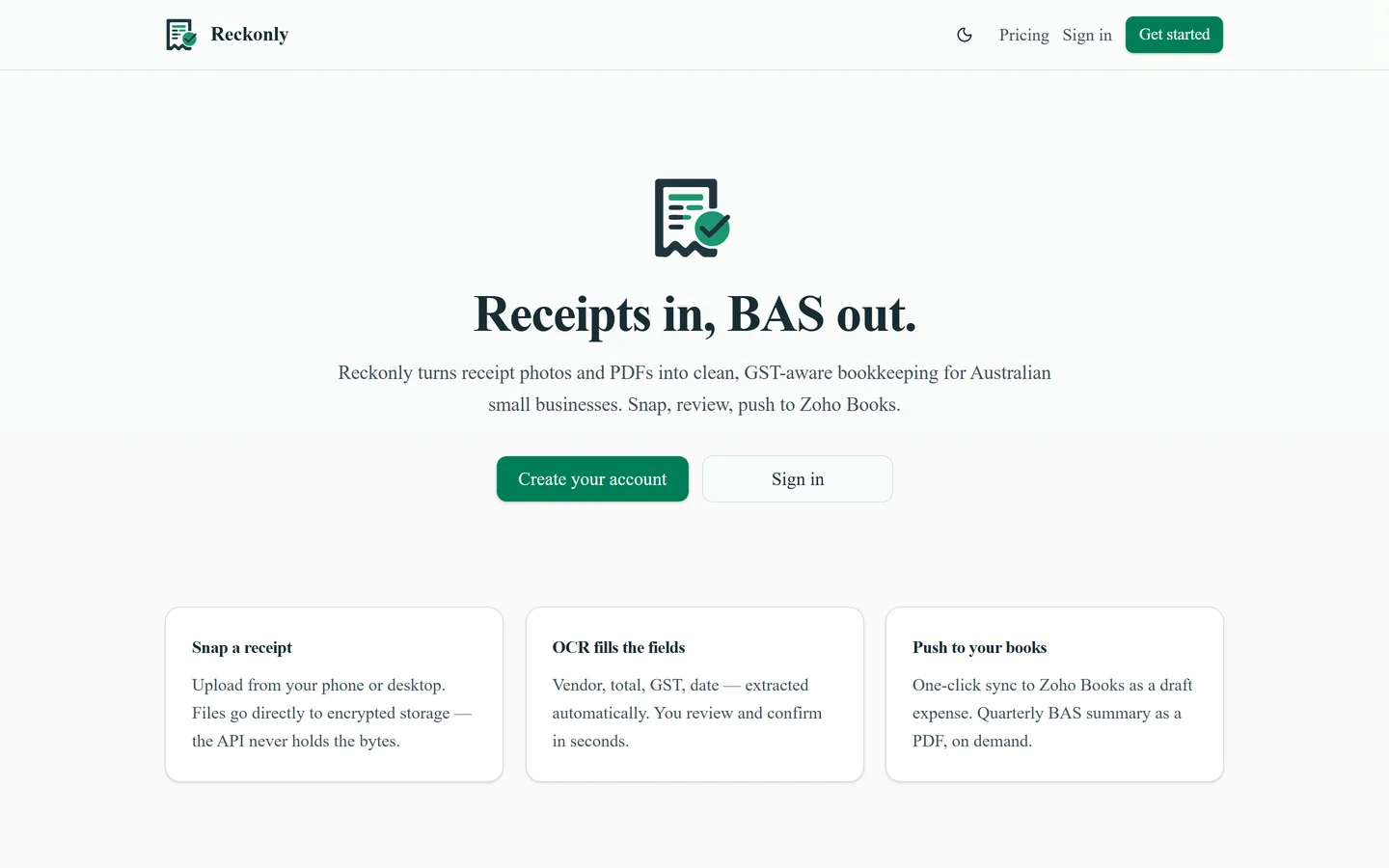
- Small-business bookkeepingReckonly: turning a shoebox of receipts into books an accountant can useSnap or email a receipt and OCR pulls out the vendor, totals, GST and date. You confirm, and it files to Zoho Books as a draft expense in one click — with a BAS summary ready each quarter.
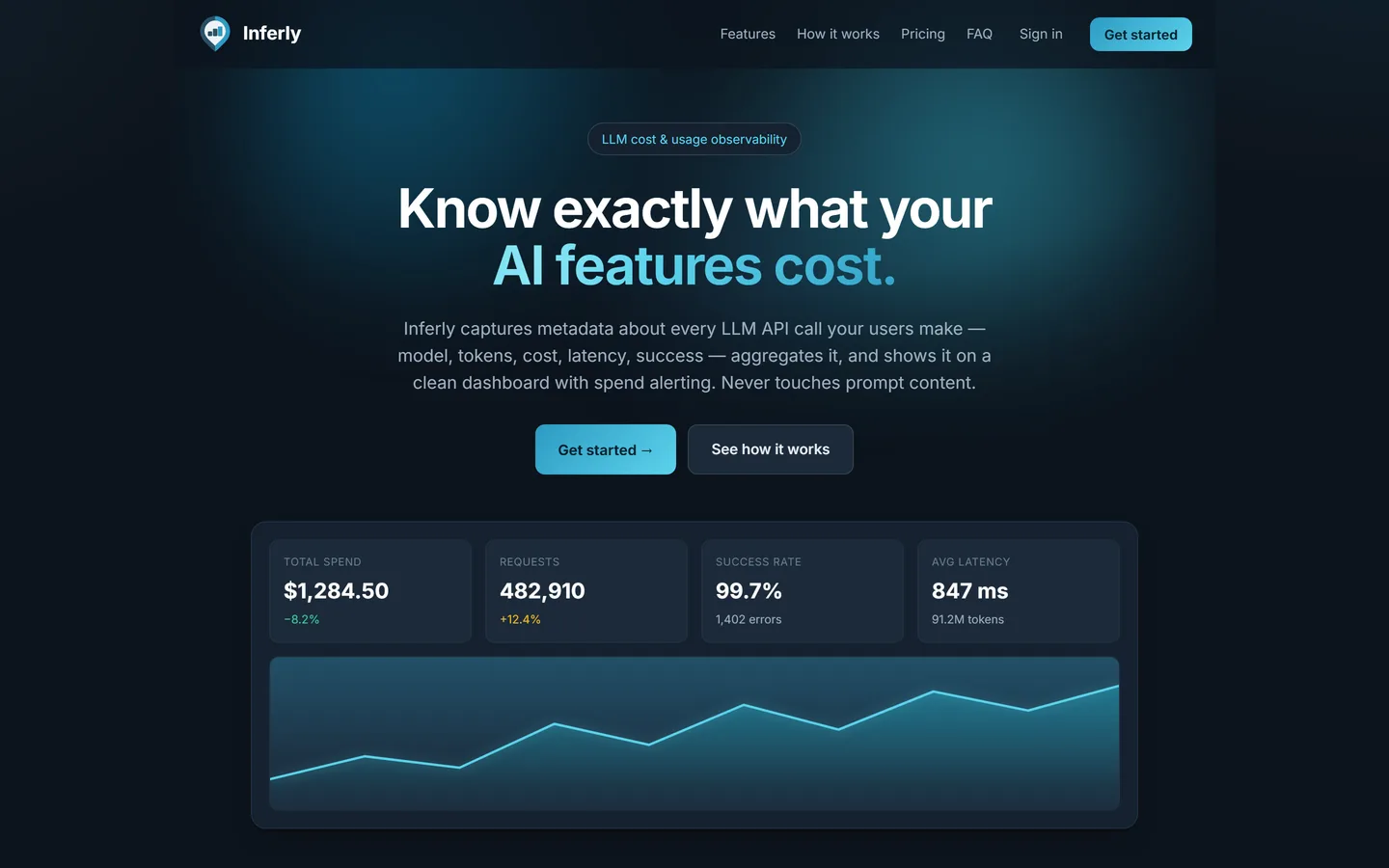
- AI cost observabilityInferly: knowing what an AI feature costs while it is runningPer-call telemetry for teams shipping AI features — model, tokens, latency and status posted to one JSON endpoint and priced with time-versioned rates. No SDK, and prompts never leave your app.
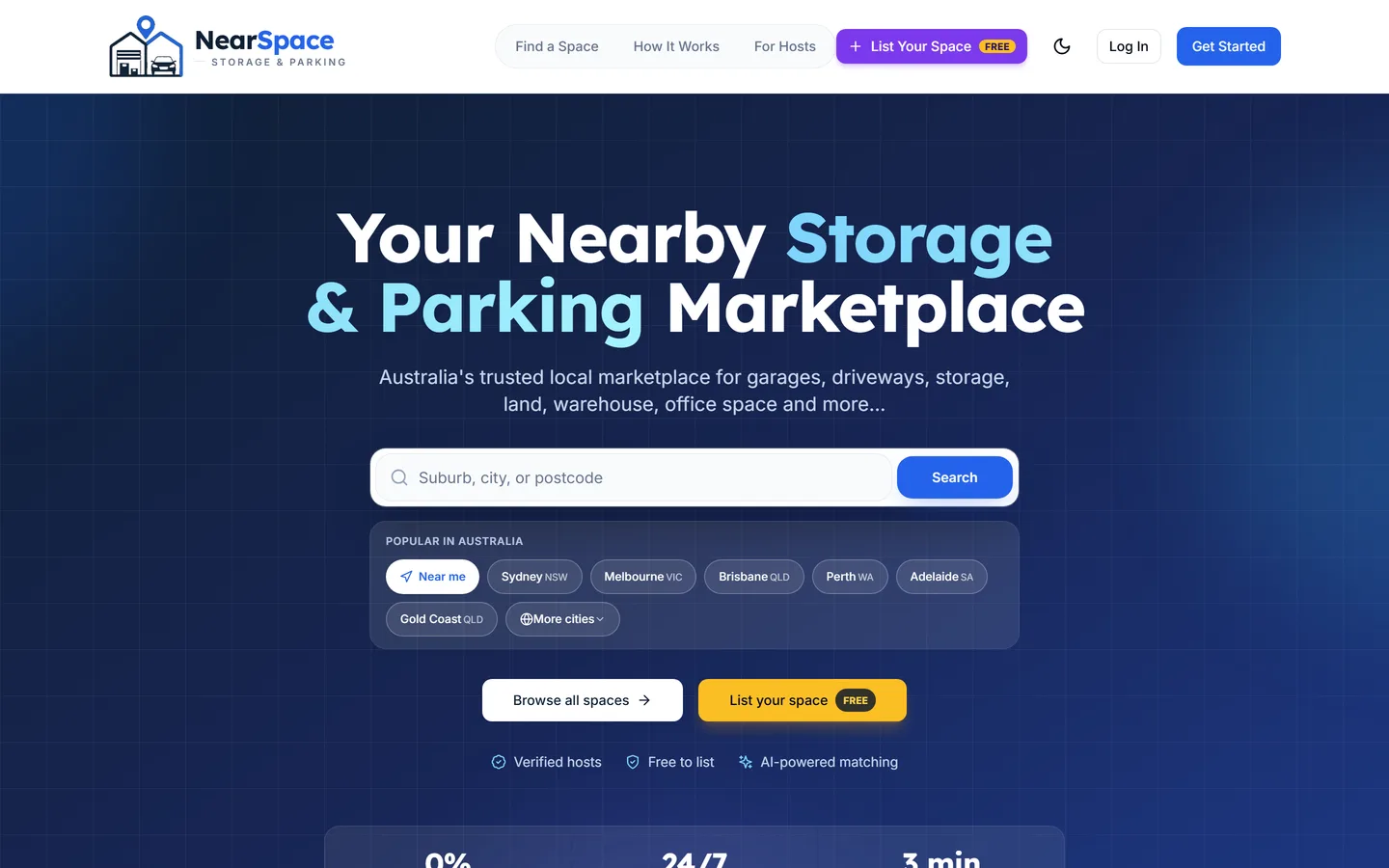
- Storage & parking marketplaceNear Space: renting out the garage nobody was usingAn AI-powered marketplace for unused garages, driveways and storage. Identity-verified hosts list free, renters book online with instant confirmation, and smart-lock codes handle access.
Guides worth reading first
- 7 min readWhen should a small business replace its spreadsheets with an internal tool?
- 5 min readHow much does custom software cost in Australia in 2026?
- 4 min readOff-the-shelf software vs custom software: how an Australian small business should decide
- 4 min readConnecting your software to Xero, MYOB or Zoho Books: what's actually involved
- 4 min readOnline booking systems for small business: off-the-shelf or custom?
- 4 min readShould your small business add an AI chatbot to its website?
Related
- Web apps & MVPsweb app development for MVPs and internal toolsWeb app development for founders and small businesses: accounts, data, payments and dashboards. MVPs and internal tools from A$2,500, quoted individually.
- Pricing & quoteswhat a website, web app or custom build actually costsSoftware development pricing in Australia, explained plainly: three starting tiers from A$900, what moves a quote, and how fixed-price quoting protects you.
- Live productslive products this studio has designed, built and shippedA software development portfolio you can click through: live products by an Australian studio, covering bookkeeping, marketplaces, AI and integrations.
Common questions
How much does custom software cost?
A Custom Engagement starts from A$4,500. A single internal workflow with one user type typically lands between A$4,500 and A$12,000, a customer-facing portal with logins and payments between A$8,000 and A$25,000, and a system replacing several subscriptions with accounting integrations between A$15,000 and A$40,000. You get a fixed figure tied to a written scope after the free consultation, not a range.
How long does a custom software project take?
Three to six weeks for a single internal tool, six to ten weeks for a customer-facing portal, and eight to fourteen weeks for an integrated system. The biggest variable is how quickly scope decisions get made, which is why discovery ends with a written document rather than a conversation.
Would off-the-shelf software be cheaper for us?
Often, yes, and we will tell you when that is the case. If your process is standard — accounting, payroll, single-service bookings — existing tools will beat anything custom on price and reliability. Custom wins when the workaround has a real cost, when subscriptions are being stacked to approximate your process, or when the process itself is your competitive advantage.
Can you work with the software we already have?
Yes, and it is frequently the cheapest useful project. A small custom layer on top of tools you keep — a quoting tool that pushes accepted quotes into Xero, or a booking flow that follows your real rules — runs A$2,500 to A$6,000 and removes the specific pain without a migration.
What happens if we stop working with you?
Nothing breaks and nothing is withheld. Because every account and the code repository are already in your name, another developer or an internal hire receives the handoff documentation and a standard stack, which makes it a routine handover rather than a rescue job.